


The main difference between a pillow block and a flange housing is how it is mounted. A pillow block bolts to a surface that runs parallel to the shaft, typically a base or frame. A flange housing bolts to a surface that is perpendicular to the shaft, typically a machine wall. Both carry the same type of bearing insert, so the right choice is mainly about the machine’s geometry, loads and cleaning.
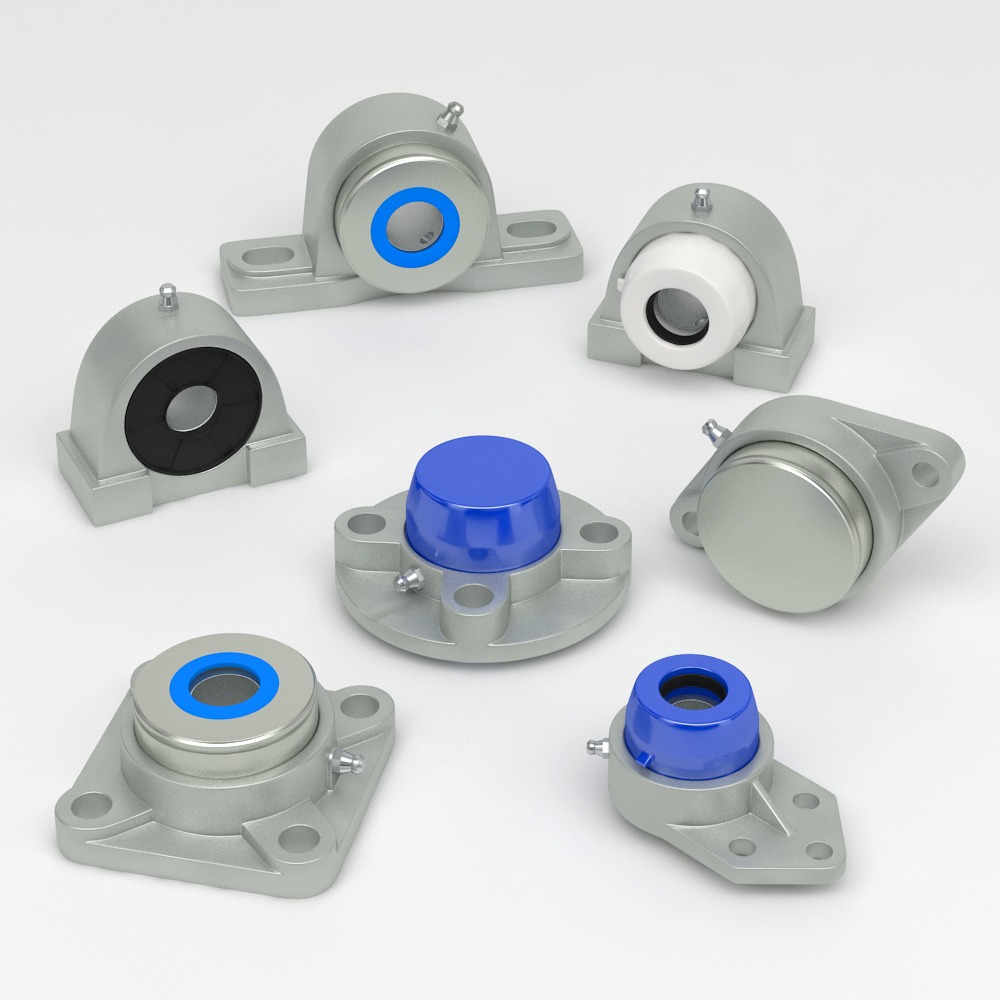
The pillow block
A pillow block, also called a plummer block, has a foot with two bolt holes and holds the shaft at a fixed height above the mounting surface. It is the classic choice for conveyors, fans and long shafts that rest on a frame. Variants include tapped-base units, where the bolts enter from below, and take-up units, which allow the shaft position to be adjusted to tension a belt or chain.
The flange housing
Flange housings come in several shapes:
- Square four-bolt flanges give a stable mounting and handle higher loads.
- Oval two-bolt flanges save space and suit lighter loads.
- Round flanges are often used where the housing sits in a bore or must be centred precisely.
Because the flange sits flat against a wall, it is a natural choice when a shaft passes through a machine side panel, such as on mixers, pumps and many packaging machines.
Loads and alignment
The load direction should match the housing. In a pillow block, the radial load ideally pushes the housing towards its base. If the load pulls the housing away from the base, the bolts take more of the force, and a flange mounting or a heavier housing may be the better option. Both types usually use self-aligning inserts that compensate for small misalignments, but large errors still reduce service life.
For a side-by-side look at differences between pillow block and flange bearing housings, including when each design makes most sense, it is worth comparing mounting surfaces and load paths on your own drawings.
Materials for demanding environments
In dry industrial settings, cast iron housings are common. In food and pharma, stainless steel or thermoplastic housings are preferred because they resist corrosion and cleaning chemicals. For wet areas, check that the housing can be fitted with closed end covers, that the shape lets water run off, and that the insert is sealed and lubricated for life to avoid relubrication points.
A quick decision guide
- Shaft runs above a base or frame: start with a pillow block.
- Shaft passes through a vertical panel: start with a flange housing.
- Belt or chain must be tensioned: consider a take-up unit.
- Washdown or food contact zone: choose stainless or thermoplastic with covers and hygienic geometry.
Whatever the type, documentation matters in regulated industries. A look at NHK’s EHEDG, 3-A and FDA certifications shows which documents to request when bearing units are used in food production.
Installation tips for both types
A good housing choice can still fail if installation is careless. Make sure the mounting surface is flat and clean, because an uneven base distorts the housing and preloads the bearing. Tighten the mounting bolts to the recommended torque and in a crosswise pattern for four-bolt flanges. Align the shaft carefully, even when using self-aligning inserts, and lock the insert to the shaft with the method specified by the manufacturer, such as set screws or an eccentric collar. In hygienic areas, check that no gaps remain between the housing and the frame where water can collect, and fit end covers before the first cleaning. Finally, record the housing type and size in the maintenance system so that replacements are identical to the original.
Frequently asked questions
Can the same bearing insert go into both housings?
Often yes. Many inserts are standardised so that they fit pillow blocks and flanges of the same size series.
Which housing is easier to clean?
It depends on the design rather than the type. Smooth surfaces, few crevices and closed covers matter more than the mounting style.
Is a four-bolt flange always stronger?
It generally provides a stiffer mounting than a two-bolt flange, but the actual capacity depends on the insert and housing material.
Summary
Start with how the shaft meets the machine, check the load direction, then choose materials and seals for the environment. That order prevents most housing mistakes.